Wednesday, June 24, 2009

Dancing with the Hips

Last weekend I attended a Folk Festival which included, besides styles I am more familiar with Hawaiian and Tahitian dancers. While they are, of course, part of the same family, there are definite differences.
Hula dancer
Hawaiian dancing is hula dancing. Although the leader of the hula troop assured us that men hula dance too, and although there were men in the troop, the style is a woman's style. It features gentle swaying of the hips, something women are better built for than men. Women ripple their hands as they make gestures. Men hold their hands straight, which makes men's hula look like a toned-down version of the women's. And then there are the various hand gestures in which women hold their hands over the "mountains" with their finger tips in the "valley." Men have neither "mountains" nor a "valley," which makes clear who this style of dance is intended for. (Presumbably men have some sort of war dance, but they didn't get into that).
Tahitian dancers
Male Tahitian dancers
Tahitian dancing, though related, is different, particularly, more fast and furious. Tahitian dancers move their hips fast and shimmy all the way down to the ground. Although there were no men in the Tahitian group, the troop assured us that male styles are a variation on the theme -- less emphasis on the hips, perhaps, than women, but more aggressive, with plenty of forward thrusting, and no doubt that this is a war dance. (One member's comment was that you expect them to take your head off).

Tahitian dancing is definitely more strenuous. The leader of the Hawaiian troop was rather on the plump side; the Tahitian dancers were all lean. And it did not take long to find out why. They lead us through a few basis Tahitian moves and before long we could feel the burn. One of them commented that she lost 30 pounds.

Tahitian dancing is also more athletic than another style of dancing that involves a lot of hip movement -- belly dancing. I have seen many belly dancers with plenty of belly. Not so the Tahitian dancers.

Belly dancers. They aren't always thin, and some have quite a bit of belly.

Labels:

Monday, August 25, 2008

Signing Off

A personal announcement: My posts will probably become sparse to non-existent in the foreseeable future. Visiting legal blogs has finally inspired me to start law school, which will keep me too busy to post with any frequency.

Until I am actually admitted to the bar, I will still consider myself an Enlightened Layperson and continue to blog as such.

Labels:

Wednesday, June 18, 2008

On the Lighter Side, or Letters, Numbers and Colors

(As a child, I played with refrigerator magnets of the letters and numbers, in various different colors. But some letters just looked right in some colors and wrong in others. Today playing Sudoku I shade each number with a different color. Many people understand that this makes it easier to see which ones are missing. But most do not seem to understand that the color selections are not arbitrary.

And, after all, if we can associate colors with moods, names with personality types, and so forth, why not colors with letters and numbers. So, here are the numbers and letters in their proper colors (although I am open to debate about the letters H, L, V, W, X and Y.

1 2 3 4 5 6 7 8 9

A B C D E F G H I (actually, I is white, but it wouldn't show so I used light gray)
J K L M N O (O really is black)
P Q R S T U V W X Y Z

Now, I can imagine how some people may object to this color scheme. "But EL," they may say, "some colors get used over and over and some only once."

To which I reply, "I can't help it. I don't choose the colors for the letters. They just ARE!"

What do you think of that?

Labels:

Wednesday, January 09, 2008

The Paganini Factor

Niccolo Paginini was a virtuoso violinist of such skill that conventional violin music seemed boringly easy for him. Searching for a challenge, he tried clever tricks, "like tuning one of his strings a semitone high, or playing the majority of a piece on one string after breaking the other three." He also wrote his own compositions that would offer him an adequate opportunity to make use of his talents. Playing his own compositions, he was able to show off "techniques that included harmonics, double stops, pizzicato with the left as well as the right hand, and near-impossible fingering and bowings."

There is just one problem with Paganini's compositions. They are not very good music. Doubtless some people enjoy watching a virtuoso violinist playing Paganini to show off his stuff, but Paganini compositions are not something anyone would listen to for the sheer beauty of the music itself. Paganini music.

This tendancy is by no means limited either to Paganini, or to music. It is present in a wide variety of arts ("art," including practical as well as "fine" arts, so long as some aesthetic component is present). Artists become bored simply trying to please their audience (or consumsers) and focus instead on what poses the greatest challenge to the artist, whether anyone else would want it or not. Call it the Pagnini factor.

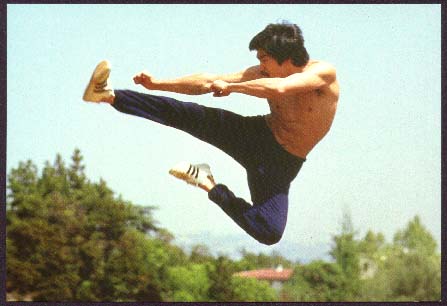
Hence we have Paganini gourmet cooking that no one would want to eat, Paganini fashions that no one would want to wear or even look at, and Paganinin hairstyles that are threatened with the slightest activity. Paganini architecture is ornate to the point of ugliness. Paganini martial arts feature fantastically elaborate maneuvers that are worse than useless in actual fighting. Paganini movies blow the bank on special effects with no coherent plot. But saddest of all are the Paganini dogs, bred for difficult-to-achieve trait that ruins their health.

Paganini hairstyle:

Paganini martial arts:

Paganini architecture:

Labels:

Saturday, January 05, 2008

And Now for Something Completely Different (Or, Dresses and Robes)

NOTE: The primary purpose of this post is to figure out how to illustrate (because what fun is a blog without pictures these days?). Also to show that I can post on non-political topics.

Last spring I went to a sale of folk costumes which included, besides women's dresses and men's pants and tunics, a North African men's robe. What I found most interesting was that, although dresses and robes are both undivided below the waist and open at the bottom, one could tell them apart at a glance. This difference was not just that dresses are for women and robes are for men, so the dresses had a more feminine style. This was mostly true, but secondary. (And besides, women do sometimes wear robes as well). The real difference between a dress and a robe was something else -- the waist. Dresses have them, robes don't. (And, not by coincidence, the waist is more clearly marked in women than in men).

Can there be any doubt which of these is a dress and which is a robe?


Left, women's robe. Even on women, a robe has no waist built into the garment.

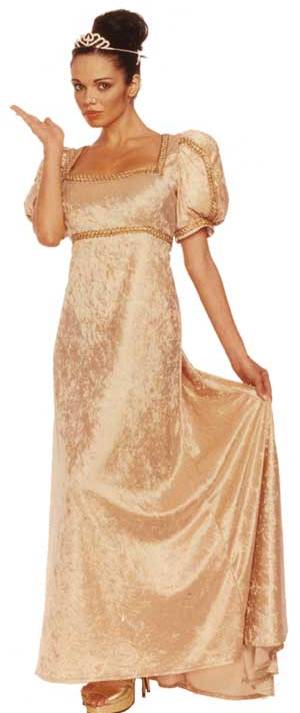
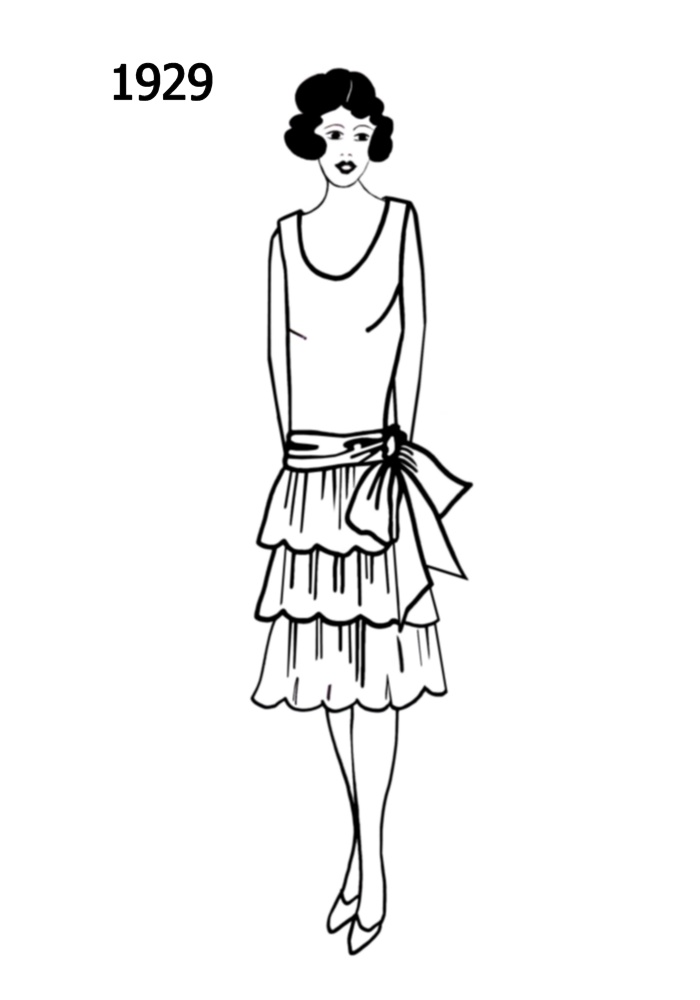
The "waist" of a dress need not be a woman's natural waistline. Some dresses have waists just under the breasts. Others have waists somewhere around the hips. I have even seen a dress that only flared out into the skirt a few inches above the knees, a very low "waist" indeed!


Above, Empire waist, just below the breasts.

Right, flapper, with her waist about hip level.

My dictionary defines a robe as "a long, loose, flowing outer garment." To this definition, I would add that a robe is a long, loose garment in which a single piece of fabric hangs straight from collar to hem without any waist build into the garment. (Of course, it can be belted). A dress has one or more pieces of fabric from collar to hem, and always accentuates some sort of "waist," whether by gathering a skirt into a top, by the use of elastic, or by narrowing down with darts.

Another conclusion follows from this distinction between dresses and robes. A dress is a much more elaborate cut of garment than a robe. Making an ornate dress means not only adding ornaments to it, but making an elaborate cut to the dress itself. A robe is an inherently simple cut, with only one piece of fabric between collar and hem. If a robe can be ornate (and who would doubt it can), then the ornateness must be from decorations added to the simple cut.
Above, bustles. Freed from the restriction of a single piece of fabric from collar to hem, there is almost no limit on how elaborate the cut and style of a dress can be.

Right: This ceremonial robe is ornate in its embroidery and decorations, but the basic cut remains simple.

Labels: